If you have ever shared a meal in Japan, you may have noticed people gently putting their hands together and saying “itadakimasu” before they start eating.
But what does itadakimasu really mean? Is it religious? Is it like saying “Bon appétit”? And should visitors say it too?
In this guide, we’ll explain the meaning of itadakimasu, its cultural background, and how to use it correctly when eating in Japan.
- What Does “Itadakimasu” Mean in English?
- Is “Itadakimasu” Religious?
- When Do Japanese People Say It?
- How Is It Different from “Bon Appétit”?
- The Cultural Meaning Behind Itadakimasu
- Should Foreign Visitors Say It?
- What Do Japanese People Say After Eating?
- Why This Custom Still Matters Today
- FAQ About Itadakimasu
- Final Thoughts
What Does “Itadakimasu” Mean in English?
The word itadakimasu (いただきます) literally comes from a humble verb meaning “to receive.”
A natural English translation would be:
- “I humbly receive.”
- “I gratefully receive this meal.”
However, it doesn’t translate perfectly into English. Unlike “Let’s eat” or “Bon appétit,” itadakimasu expresses gratitude — not only for the food itself, but also for:
- The person who prepared it
- The farmers and producers
- Nature and the ingredients
- The life that was taken to provide the meal
It reflects appreciation and respect rather than simply wishing others a good meal.
Is “Itadakimasu” Religious?
Many people assume itadakimasu is a Buddhist prayer. While it has historical connections to Buddhist philosophy — especially the idea of gratitude for all living things — it is not considered a religious phrase today.
In modern Japan:
- Children say it at school lunch
- Families say it at home
- Friends say it at restaurants
- People even say it before eating alone
It is a cultural custom rather than a religious ritual.
When Do Japanese People Say It?
Japanese people say itadakimasu:
- Before every meal (breakfast, lunch, dinner)
- Before eating snacks or convenience store food
- Even when eating alone
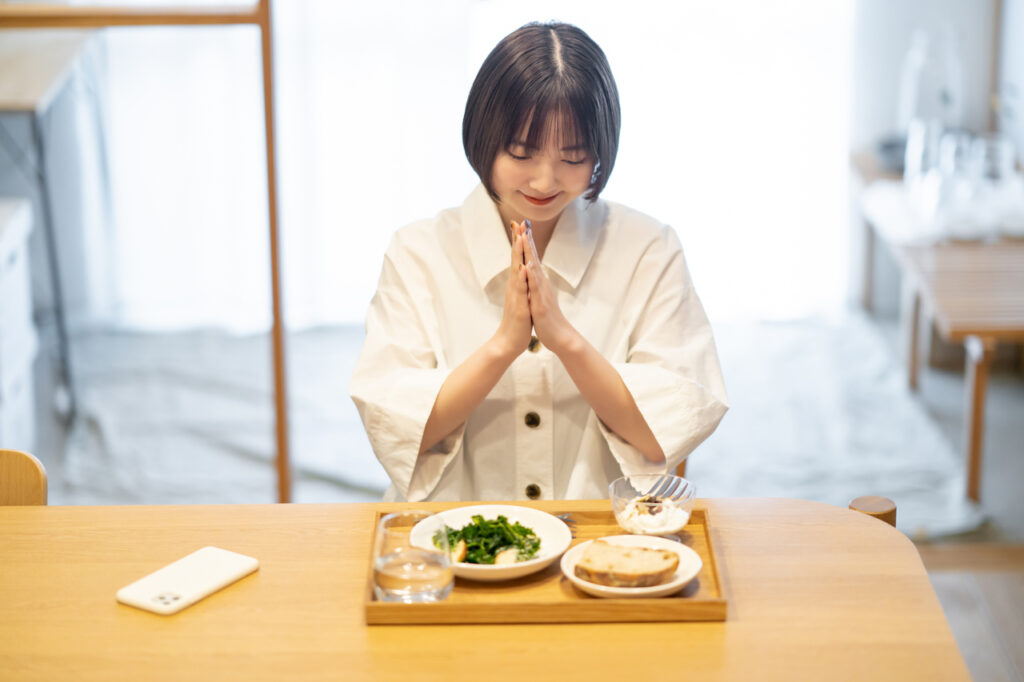
Typically, people lightly put their palms together and say the word politely before taking the first bite.
There is no strict rule about hand position, but the gesture resembles a small expression of thanks.
How Is It Different from “Bon Appétit”?
At first glance, itadakimasu might seem similar to phrases like:
- “Bon appétit” (French)
- “Enjoy your meal” (English)
- “Let’s eat”
However, there is an important difference.
“Bon appétit” wishes others enjoyment.
Itadakimasu expresses gratitude and humility.
The focus is not on enjoyment, but on appreciation.
The Cultural Meaning Behind Itadakimasu
Food plays a central role in Japanese culture. Meals are not just about eating — they are about harmony, respect, and mindfulness.
By saying itadakimasu, people acknowledge:
- The effort of the cook
- The work of farmers and fishermen
- The natural resources used
- The life sacrificed for the meal
This reflects a broader Japanese value: gratitude toward others and toward nature.
Should Foreign Visitors Say It?
Yes — it is perfectly acceptable for visitors to say itadakimasu in Japan.
In fact, many locals appreciate it when foreigners try to understand and respect Japanese customs.
You don’t need perfect pronunciation. A simple “itadakimasu” said politely before eating is enough.
However, it is not mandatory. No one will be offended if you forget.
What Do Japanese People Say After Eating?
After finishing a meal, Japanese people say:
“Gochisōsama deshita” (ごちそうさまでした)
This phrase means something like:
- “Thank you for the feast.”
- “That was a wonderful meal.”
It expresses appreciation after eating, just as itadakimasu expresses gratitude before eating.
Together, these phrases create a respectful beginning and ending to every meal.
Why This Custom Still Matters Today
In modern life, meals are often rushed. However, in Japan, even a quick lunch can begin with a brief moment of gratitude.
Whether eating a homemade dinner or convenience store rice balls, saying itadakimasu creates:
- A pause before eating
- A moment of awareness
- A sense of appreciation
This small habit reflects the deeper cultural value of mindfulness in everyday life.
FAQ About Itadakimasu
What does itadakimasu literally mean?
It comes from a humble verb meaning “to receive.” A natural translation is “I humbly receive.”
Is itadakimasu a prayer?
No. Although influenced by Buddhist ideas, it is not considered a religious prayer in modern Japan.
Do Japanese people say it every time?
Yes, it is commonly said before every meal, whether at home, school, or restaurants.
Is it rude not to say it?
Foreign visitors are not expected to say it. However, it is considered polite in Japanese culture.
Do you have to put your hands together?
It is common but not required. The gesture is a simple expression of gratitude.
Final Thoughts
Itadakimasu is more than just a word. It represents gratitude, humility, and respect for food and life.
Understanding this simple phrase offers a deeper glimpse into Japanese culture — where even everyday actions carry meaning.
If you are traveling to Japan, try saying itadakimasu before your next meal. It’s a small word with a powerful message.
If you are interested in Japanese food, you can click the article below
https://hitsujimajin.com/what-to-eat-in-japan-for-the-first-time/